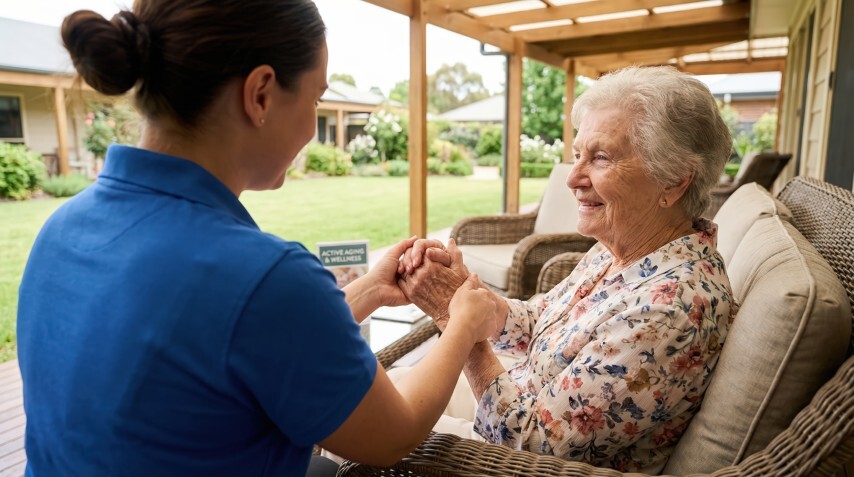
Margaret hasn't been to the Thursday music program in three weeks.
A skilled life enrichment director knows this. They notice it. They carry it. They might bring it up with a care partner in passing, or make a note to check in with her later in the week.
But most communities don't have a system that surfaces it. Documents it. Connects it to the other things that have quietly been shifting.
Margaret has been quieter at meals lately, less present in conversation. She's mentioned her daughter twice in the same morning. She skipped the garden walk she never used to miss.
Individually, each observation is easy to explain away. Together, they're telling a story. And someone, somewhere in that community, needs to be able to read it before the moment for connection passes.
That is precisely what resident engagement intelligence systems are built to do.
The life enrichment director in a senior living community often knows more about each resident than anyone else on the care team.
They know who lights up during music and who finds group programming exhausting. They know whose birthday is next Thursday, who lost a sibling last fall, who used to be a schoolteacher and still stands a little taller when someone asks for their expertise.
They know this because they pay attention. Because they show up every day and understand that meaningful engagement isn't about filling a calendar. It's about knowing who is in the room.
The problem is not the knowledge. The problem is where the knowledge lives.
The problem isn't knowledge. The problem is where the knowledge lives.
It lives in their heads, in hand-written notes, in informal conversations in hallways and common rooms. None of it is structured. None of it connects this week's patterns to last month's.
None of it stays when that staff member takes a week off, moves to a new role, or eventually leaves the community entirely.
The institutional knowledge that life enrichment professionals build over months and years is one of the most valuable assets a community has. And almost none of it has been designed to be captured, shared, or acted on at scale.
Most senior living communities have activity director software or resident engagement software of some kind. These tools help schedule programs, track attendance, communicate with families, and publish weekly calendars. For what they were designed to do, many of them work reasonably well.
But they were designed for activity management, not engagement intelligence. That distinction matters more than it might seem.
Traditional activity director software answers the question: what is happening this week?
Resident engagement intelligence software answers a different set of questions entirely. Which residents are participating less than they were three months ago? Who attended twelve programs in October and three in November? Who tends to withdraw in the weeks following a loss in the community? Who hasn't joined a social activity since a specific date?
These are engagement intelligence questions. Most activity director software and resident engagement software available today was not designed to answer them, because until now, the category to do so didn't exist.
A resident engagement intelligence system doesn't replace the activity calendar or the care plan. It works alongside them, tracking the signals that reveal how each resident is actually doing beneath the surface of their scheduled week.
Those signals include patterns across several dimensions of community life:
No single signal tells the whole story. Together, they create a clearer view of each resident's engagement health, and where early attention might make a meaningful difference.
Senior living communities are navigating real pressure. Life enrichment teams are often small relative to the number of residents they serve. The informal observation networks that have always sustained community knowledge are harder to maintain when staff are stretched thin and turnover is high.
At the same time, the research connecting engagement to health outcomes has never been clearer.
Meaningful activity supports cognitive function. Social connection contributes to emotional resilience. Participation in programs aligned with a resident's identity and interests isn't simply pleasant. It is protective.
Communities that can recognize who is disengaging early, before a visible health change, before a fall, before a worried call from a family member, are in a fundamentally different position than those relying entirely on informal observation and institutional memory.
That is not a criticism of engagement professionals. It is a recognition that the job is harder and more consequential than the systems available to support it have ever reflected.
Resident engagement intelligence exists to close that gap.
The goal of a senior living engagement platform built around resident engagement intelligence isn't to generate dashboards. It is to help the right person know the right thing at the right time.
When a resident's participation signals shift, the life enrichment director should know. Not through a manual audit of spreadsheets or a search through paper records, but through a system that surfaces the pattern clearly enough to act on.
That action might be as simple as a check-in conversation. A personal invitation to a program this resident has always loved. A note passed to the care team. A phone call to a family member.
The system does not replace the human judgment involved in any of those moments. It makes sure that judgment gets applied where it is needed, before an opportunity for connection slips past.
That is what resident engagement intelligence looks like in practice. Not automation. Not prediction. Awareness, organized into action.
Senior living communities have always had people who cared deeply about resident engagement.
The life enrichment professionals who show up every day, notice what others miss, and build genuine relationships with residents do work that is harder to measure than a medication schedule and more important than it is often credited.
What they have lacked is a system designed to support that work at scale. One that captures what they observe, surfaces what they might miss, and ensures that no resident quietly drifts toward disengagement without someone noticing.
Resident engagement intelligence systems exist to be that support. Not to replace the human relationships that make a community feel like home, but to protect them by making sure no signal goes unnoticed for too long.