The calendar said it was a good week. Five group activities a day, every slot filled, a packed schedule printed and posted on the board by the front entrance. The life enrichment director looked at it on Friday afternoon and felt proud of the lineup her team had built. Then she walked the hallway. Room after room, doors half open, residents sitting quietly. Some reading. Some watching television. Some doing nothing at all. The group activity happening down the hall had twelve people in it. The community had a hundred and forty residents. The calendar was full. The building was not.
She had spent twenty hours that week planning, promoting, and running group events. The residents who showed up loved them. But the residents who did not show up, and that was most of them, were not on anyone's radar. Nobody was tracking those interactions. Nobody was measuring whether they had been seen that day. The calendar could not tell her who needed her. It could only tell her what was scheduled.
Activity calendar software has been the default technology for life enrichment teams in senior living for decades. It does what it was designed to do well: organize group programming, publish schedules to digital signage and family apps, and give teams a visual map of the week. For that job, it works.
The problem is that the industry started treating the calendar as something it was never built to be. It became the primary lens for measuring engagement. It became the centerpiece of the life enrichment department's value story to leadership. It became the thing executive directors looked at when they wanted to know whether residents were thriving. And because the calendar only sees group events, the definition of engagement quietly narrowed to match.
Part of what cemented this pattern is regulatory. In many states, having a visible, posted activity calendar is a compliance requirement. That requirement exists for good reason. It ensures communities are offering structured programming and that residents and families can see what is available. Life enrichment professionals take that responsibility seriously, and they should.
But over time, a compliance requirement became a cultural norm. The posted calendar became the primary artifact of the department's work. The effort to build it, fill it, and keep it running became the default measure of whether the life enrichment team was delivering. Not because anyone made a conscious decision to define engagement that way, but because the system, from regulation to technology to leadership expectations, all pointed at the same thing: the calendar.
As our understanding of resident engagement deepens, there is an opportunity for regulatory frameworks to evolve alongside it. Not to remove the calendar requirement, but to broaden the definition of what meaningful engagement documentation looks like.
Attendance at group activities became the metric, the end-all be-all for judging whether engagement operations were working. A full calendar became the goal. A resident who showed up to three programs a day looked engaged. A resident who stayed in her room looked like a problem to solve.
Group event attendance is a valid signal. But treating it as the only signal, or the most important one, has quietly distorted how the industry thinks about engagement. For a significant number of residents, that framing misses the point entirely.
Research published in Activities, Adaptation & Aging found that assisted living residents attended a mean of just 21% of offered programmed activities. Fifteen percent of residents attended no programmed activities at all in a given week. That means the metric most communities use to measure the health of their engagement program reflects the behavior of a small fraction of their population.
If those numbers are even close to representative, the implications are significant. It means the group calendar, no matter how beautifully designed, only offers a window into a fraction of community life. It means the hours life enrichment teams spend building, promoting, and running group programming, while valuable for the residents who attend, are disproportionate to the time spent on the residents who do not. And it means the engagement data leadership is reviewing tells a detailed story about a small slice of the community while the majority remains largely invisible.
Here is something the senior living industry rarely says out loud: many residents simply do not enjoy group activities. Not because they are declining. Not because they are isolating. Not because something is wrong. They just prefer a quieter life. They like reading in their room, having coffee with one friend, sitting on the patio alone, or spending time in their own company. That is a legitimate preference, and it deserves to be respected.
But in a calendar-driven culture, those residents often get treated as problems. They are encouraged to attend events they have no interest in. They are flagged as disengaged because they do not show up on the attendance sheet. In some communities, they are brought to group activities as a way to fill seats or provide photo opportunities for marketing, regardless of whether the experience is meaningful to them.
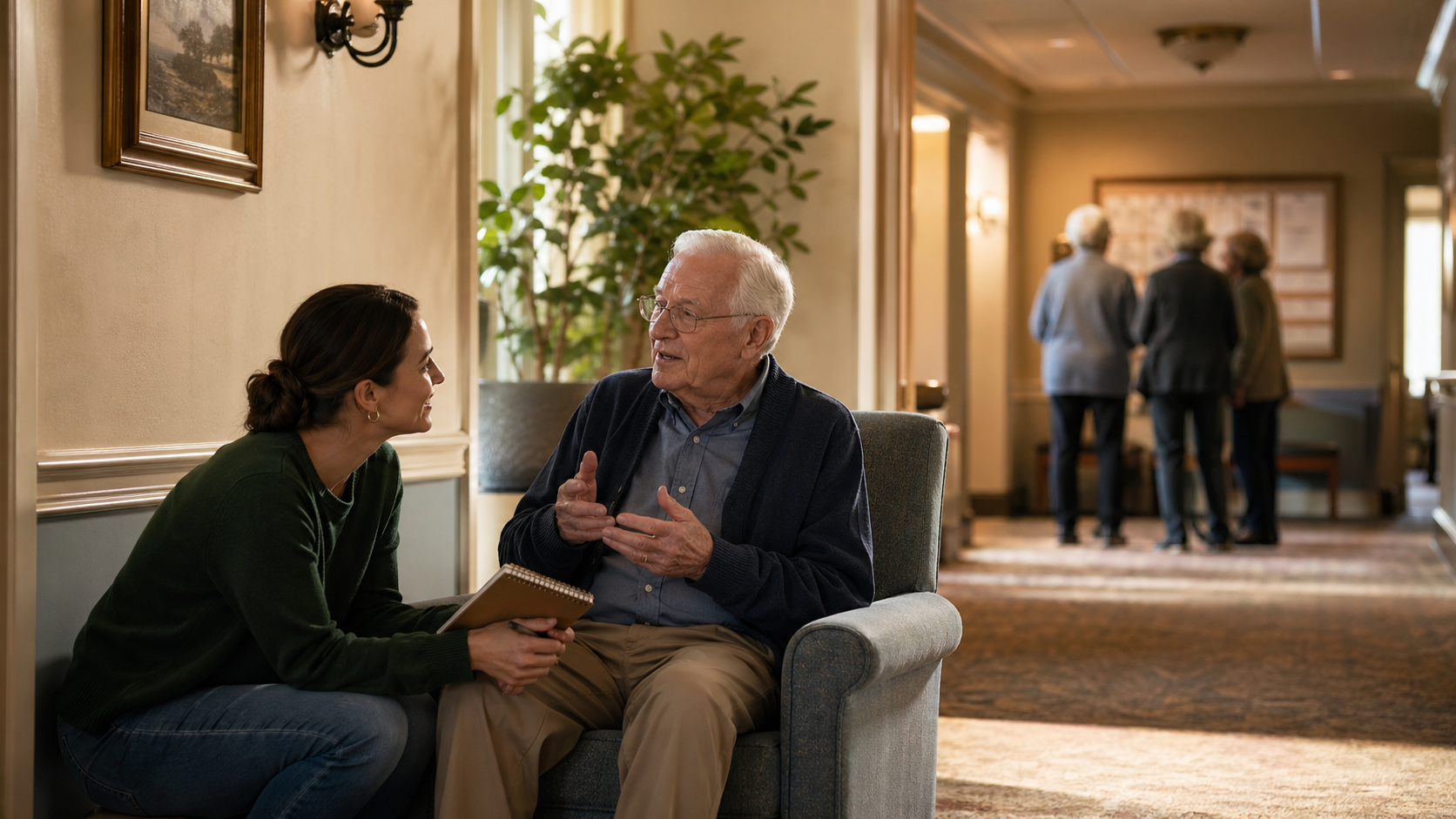
Person-centered care means something different. It means recognizing that a resident who prefers solitude is telling you something important about who they are, and your job is to meet them where they are, not pull them to where you need them to be. That resident still deserves engagement. But the engagement looks different. A five-minute conversation at their door. A book recommendation based on something they mentioned about their past. A check-in from a caregiver who noticed they seemed quieter than usual this week.
Those one-on-one interactions are the real fabric of engagement in a senior living community. They are also the ones that vanish without a trace in a calendar-first system.
If group event attendance is just one signal and not the definitive measure of engagement, the question becomes: what else should life enrichment teams and executive directors be measuring alongside it?
The answer starts with contacts per day. How many residents received a meaningful one-on-one interaction with a staff member today? Not a med pass. Not a meal delivery. A real touchpoint, where a caregiver or life enrichment team member connected with a resident as a person.
Beyond contacts per day, the engagement signals captured during those interactions are what turn a touchpoint into something the entire team can use. Did the resident seem like herself? Was her mood different than last week? Did she mention something about her daughter's visit that did not go well? Did she bring up an interest the team did not know about? Is she eating less? Sleeping more? Skipping the one activity she used to love?
Within the 5 Engagement Intelligence Dimensions, these are the 6 Engagement Intelligence Signals at work:
When these signals are captured during one-on-one interactions and made visible to the entire care team, something powerful happens. The insights do not live in one caregiver's head. They become shared intelligence that follows the resident across shifts, across departments, and across time.
This is where the conversation gets larger than life enrichment. When engagement data is treated with the same seriousness as clinical data, it begins to influence outcomes that the industry has traditionally viewed as purely medical.
Consider gradual dose reductions. Federal guidelines encourage communities to reduce the use of psychotropic medications when clinically appropriate. But reduction is difficult when care teams do not have a clear picture of what is driving the behaviors the medications were prescribed to manage. Boredom. Loneliness. Loss of identity. Unmet social needs. These are engagement problems, not clinical ones, and they respond to engagement interventions, not pharmaceutical ones.
A community with strong engagement intelligence can walk into a GDR conversation with more than a medication history. It can bring a picture of the resident's engagement patterns, their social connections, their mood trajectory, and the life events that may be influencing their behavior. That is a fundamentally different conversation, and it leads to fundamentally different decisions.
This is what it means to say that engagement is care. Not as a tagline, but as an operational reality where engagement data sits alongside clinical data in care planning, in team meetings, and in the decisions that shape a resident's daily life.
The group calendar is not going away, and it should not. Group activities matter. Community programming creates joy, builds friendships, and gives residents things to look forward to. The 15% who show up benefit enormously, and the programming itself is part of what makes a community feel alive.
But the calendar cannot be the center of the engagement story anymore. It is one input, not the whole picture. The center has to be the resident, every resident, including the ones who will never sign up for bingo and should never be made to feel lesser for it.
The shift from activity calendar software to resident engagement intelligence software is a shift in what life enrichment teams are empowered to see, to measure, and to act on. It is a shift from time slots to touchpoints. From attendance to awareness. From programming metrics to engagement signals. From a department that runs events to a department that knows every resident and can prove it.
That shift does not require a bigger calendar. It requires a different kind of system entirely.